


Forum Statistics
- Threads
- 29,486
- Posts
- 582,049
- Members
- 29,178
- Latest Member
- NameisBurger67
You are using an out of date browser. It may not display this or other websites correctly.
You should upgrade or use an alternative browser.
You should upgrade or use an alternative browser.


tommyguns2
Senior Moderators
Staff Member
- Dec 25, 2010
- 8,053
- 8,670
I think what we really want is for real wages to increase faster than inflation. If inflation equates to cost of living, if Joe six-pack makes $100/year and life costs $102/year, he feels bad. If he makes $105/year and life costs $102/year he feels better.It’s an irrefutable no-brainer for anyone with so much as half a brain cell: Cost of living has increased and will continue to rise significantly throughout this Trump (and really, any alternative that would be otherwise) era and beyond.
What I'm not really sure how to quantify is what affect does de-regulation have on cost of living. For example, if California de-regulated the fuel standards for gasoline in its state, the cost to refine gas to be sold in CA would drop significantly, and the cost at the pump would drop. That's after tax money in people's pockets. What about scrapping the regs that was going to push everyone to get an electric stove and ditch their perfectly good gas stove? What about the regs that were going to force people in CA to purchase EVs when the grid isn't big enough to support powering them? If various states reformed zoning laws and construction regulations that created incentives for builders to create more housing inventory, housing prices would decrease.
What about the downstream cost reductions to the EPA killing the rule that made carbon dioxide a pollutant? All these types of things are interrelated.

fasttwitch
VIP Member
- Mar 17, 2011
- 2,812
- 3,924
I think what we really want is for real wages to increase faster than inflation. If inflation equates to cost of living, if Joe six-pack makes $100/year and life costs $102/year, he feels bad. If he makes $105/year and life costs $102/year he feels better.
What I'm not really sure how to quantify is what affect does de-regulation have on cost of living. For example, if California de-regulated the fuel standards for gasoline in its state, the cost to refine gas to be sold in CA would drop significantly, and the cost at the pump would drop. That's after tax money in people's pockets. What about scrapping the regs that was going to push everyone to get an electric stove and ditch their perfectly good gas stove? What about the regs that were going to force people in CA to purchase EVs when the grid isn't big enough to support powering them? If various states reformed zoning laws and construction regulations that created incentives for builders to create more housing inventory, housing prices would decrease.
What about the downstream cost reductions to the EPA killing the rule that made carbon dioxide a pollutant? All these types of things are interrelated.
Why would real wages go up when we are entering the era of AI and full scale automation? People are going to become less necessary. Why would employers pay them more?
Without government interference in wages (something Trump and likely you too, are against) why would employers pay more when job seekers are in extreme abundance? The trend would be down, not up. This math aint mathing.
What will likely happen now is prices go up, wages go down.
fasttwitch
VIP Member
- Mar 17, 2011
- 2,812
- 3,924
I can ditto this through friends in various mid to high level positions in manufacturing.
I'm curious if your friends have explained how they are dealing with this?
For me (in my industry, my little corner of the world) its tricky to raise prices by the entire tariffs % amount. Everyone in my industry are all watching each other. Going up incrementally. Slowly going up rather than making dramatic changes. Also, we are spreading the increases around (for instance, raising prices on low or non tariff items) to try and spread the pain around a bit. I've raised the prices on American made good I sell to reimburse myself for the China/India/Italy losses. We've gotten a couple vendors to go lower, too. Usually we offer them more volume to obtain better pricing. In some cases we are subbing in cheaper made items. Luckily we have such low overhead we are doing well. Our competitors have huge warehouses and huge staff and blanket orders they need to maintain. Also, a couple of competitors have disappeared. Victims of the tariffs and margins that were never high enough.
It is very challenging.
tommyguns2
Senior Moderators
Staff Member
- Dec 25, 2010
- 8,053
- 8,670
Wages are connected to productivity. If I am a factory worker and operate a machine that kicks out 10 widgets per hour for $10/widget, I'm generating $100/hour in revenue. I also cost my wages, benefits, and the factory is paying for the tooling, insurance, etc. Let's say all that adds up to $65/hour. The factory is then generating $35/hour in profit.Why would real wages go up when we are entering the era of AI and full scale automation? People are going to become less necessary. Why would employers pay them more?
Without government interference in wages (something Trump and likely you too, are against) why would employers pay more when job seekers are in extreme abundance? The trend would be down, not up. This math aint mathing.
What will likely happen now is prices go up, wages go down.
If some form of technology, for example, AI, can increase worker/machine productivity by 10%, they're kicking out 11 widgets/hour and generating $110/hour of revenue, with other costs being the same. As the profit has increased from $35/hour to $45/hour, the factory has more margin to increase wages.
Honestly, we don't know what impact AI will have on employment levels. It absolutely will change how we do our jobs. In my field, AI has the promise/danger of automating a bit of my work flow. Obviously, my clients will not be willing to pay me $10,000 per widget when their AI can do half of what I used to do. But perhaps my client, having achieved a savings of 50% will pay me $5,000/widget, but ask me to produce twice as many widgets. We really don't know. But we can look back in history and see that when disruptive technologies occurred, mass layoffs did not occur, but the nature of the work did change.
I don't know what my field will look like in 10 years, but it absolutely will look very different than how it looks today.

Heady Muscle
VIP Member
- Oct 13, 2014
- 1,593
- 1,401

Heady Muscle
VIP Member
- Oct 13, 2014
- 1,593
- 1,401

Newsmax agrees to pay $67M settlement in defamation case over 2020 election claims
The conservative network Newsmax will pay $67M to settle a lawsuit accusing it of defaming a voting equipment company by spreading lies about Trump’s 2020 election loss.
 www.detroitnews.com
Heady Muscle
VIP Member
- Oct 13, 2014
- 1,593
- 1,401
President Trump reveals whether another meeting is in the cards after Alaska summit with Putin

 www.foxnews.com
Ten minute mark Trump says inflation and groceries are down. I call bullshit:
22 minute mark Biden drove China and Russia closer together which is a mistake. Totally agree but he is doing the same with Tariffs. In fact many countries including Canada are trading more with China since the Tariffs have been in place.
More to come.
President Trump reveals whether another meeting is in the cards after Alaska summit with Putin | Fox News Video
President Donald Trump discusses how his meeting with Russian President Vladimir Putin went and what’s next in peace negotiations and more in an exclusive interview on ‘Hannity.’
www.foxnews.com
Ten minute mark Trump says inflation and groceries are down. I call bullshit:
22 minute mark Biden drove China and Russia closer together which is a mistake. Totally agree but he is doing the same with Tariffs. In fact many countries including Canada are trading more with China since the Tariffs have been in place.
More to come.
Heady Muscle
VIP Member
- Oct 13, 2014
- 1,593
- 1,401
25 minute mark Trump states no country has mail in voting and Putin says this as well according to Trump:
How anyone can believe any word out of this person's mouth is beyond me.
Countries with in-country postal voting for all voters
- Canada
- Germany
- Iceland
- Korea, Republic of
- Liechtenstein
- Luxembourg
- New Zealand
- Poland
- Switzerland
- United Kingdom
- United States*
- Russia (Russia also has online voting)
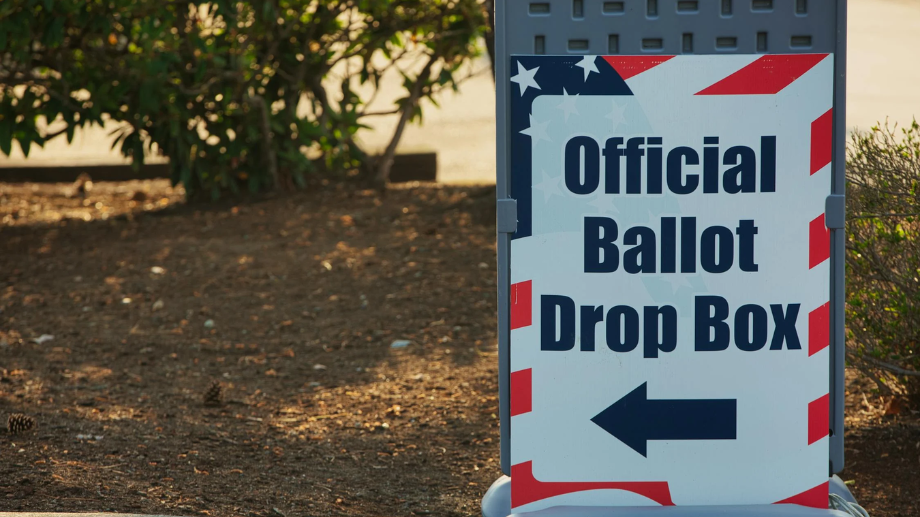
How anyone can believe any word out of this person's mouth is beyond me.
Heady Muscle
VIP Member
- Oct 13, 2014
- 1,593
- 1,401
In Russia, eligible voters have several options for participating in elections:
- In-person voting: This is a traditional method where citizens visit a designated polling station to cast their ballots.
- Multi-day voting: To increase turnout, Russian elections are often held over multiple days, typically three. This provides voters with more flexibility to choose a convenient time to vote in person.
- Online voting: In some regions, particularly larger cities, online voting is available, according to IFES Election Guide. Voters must apply for online voting by a set deadline.
- Mobile ballot box voting: Election officials may offer a mobile ballot box service where they travel to voters' homes for convenient voting. This method has been used in areas under martial law, accompanied by armed personnel, says The National Bureau of Asian Research (NBR).
Who is viewing this thread?
There are currently 0 members watching this topic